
Private – Ali Omar
During Eurosatory 2026, Security and Defense Arabia (SDA) conducted an exclusive interview with Khaled Al Zaabi, President – Platforms & Systems at EDGE Group, one of the world’s fastest-growing advanced technology and defence organizations.
In this exclusive conversation, Al Zaabi discusses EDGE’s strategic priorities for the coming years, the company’s latest defence technologies and systems on display at Eurosatory 2026, and its vision for integrating artificial intelligence, autonomy, and multi-domain operations across its portfolio. He also highlights the significance of EDGE Europe, the group’s approach to partnerships within the European defence industry, recent agreements announced during the exhibition, and the technologies that are expected to shape the future of defence innovation over the next decade. Here is the full interview:
1- EDGE has become one of the fastest-growing defence groups globally. What are your key strategic priorities for the coming years?
Growth has never been the single goal for us. It has been the by-product of a straightforward approach: build sovereign capability at home, then take what works and prove it can compete anywhere. That approach has taken our product portfolio from around 30 offerings in 2019 to over 250 today, and it is the same approach that will guide us over the next several years. Our priorities now sit in three places. The first is deepening what we already do well, particularly in unmanned systems, precision weapons, propulsion systems, and electronic warfare, where demand is rising faster than almost anywhere else in the industry. The second is international expansion done properly, through real industrial partnerships rather than simply chasing export orders. EDGE Europe is the clearest expression of that. The third is continuing to push autonomy and artificial intelligence into the core of our platforms, because that is where the next real capability gap will open up, and we intend to be ahead of it rather than catching up.
2- What are the main products, technologies, and capabilities that EDGE is showcasing at Eurosatory 2026?
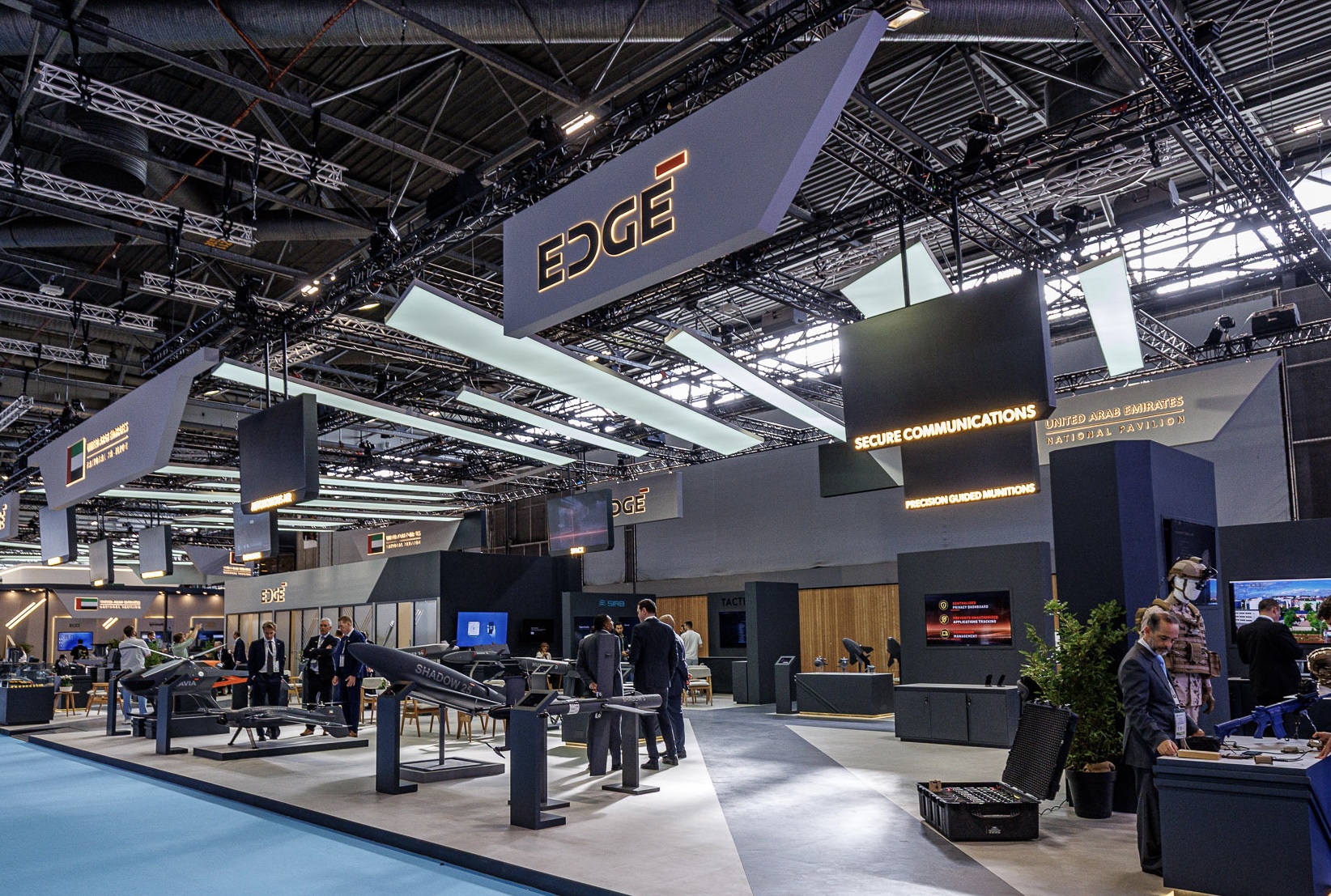
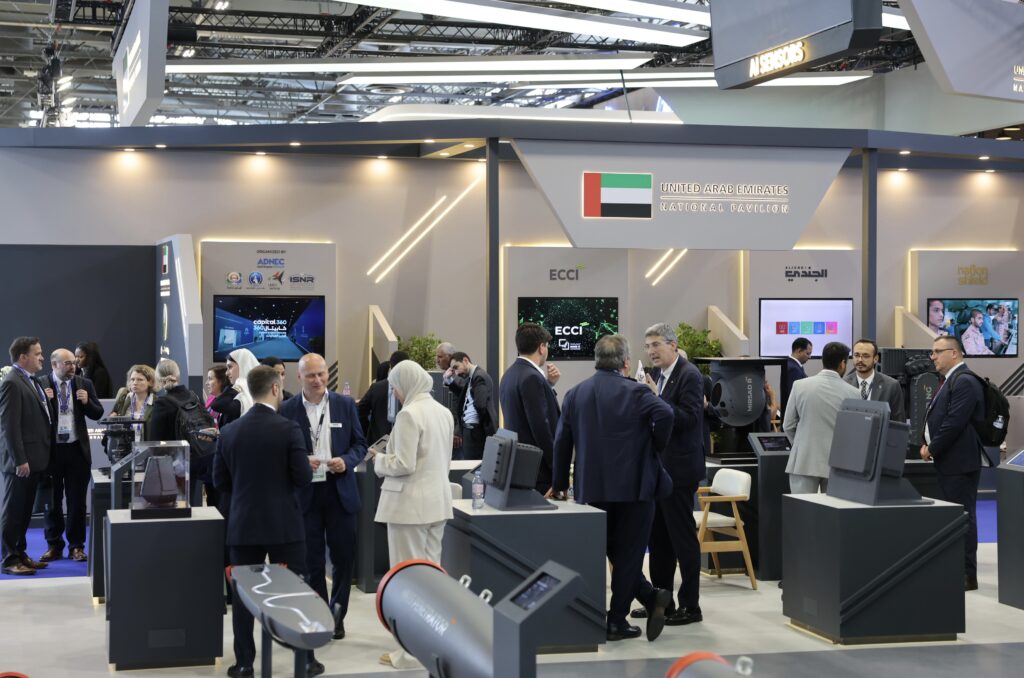
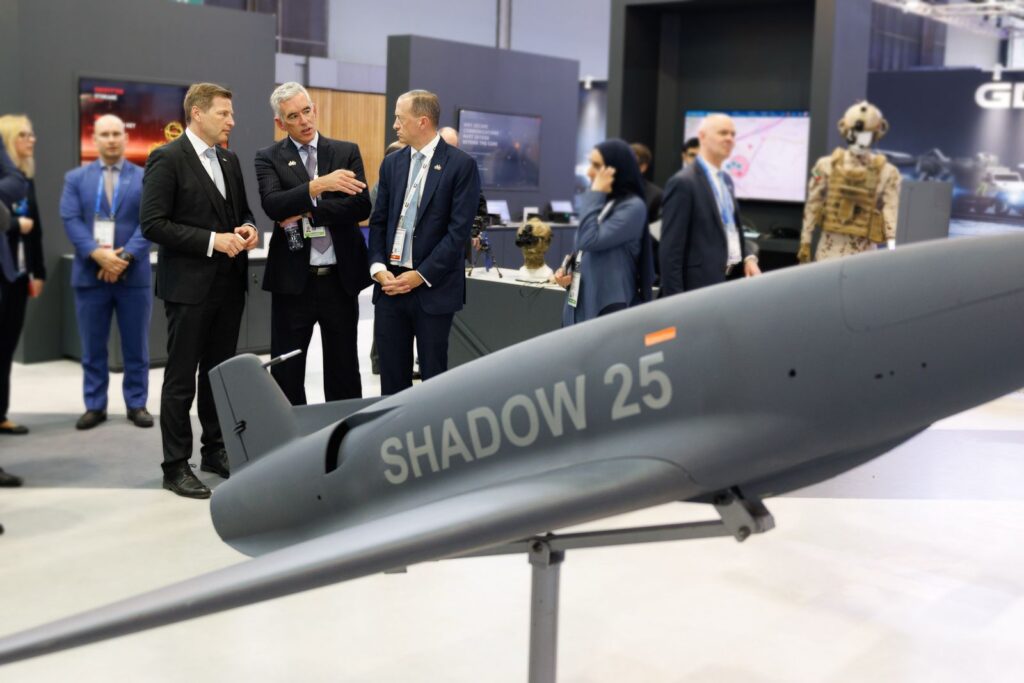
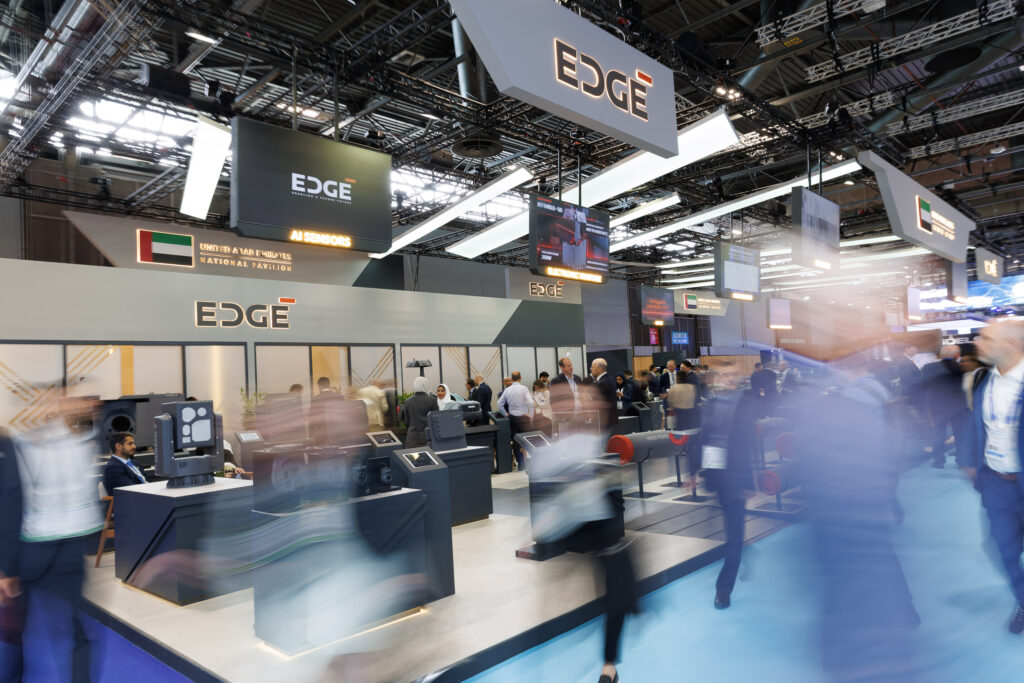
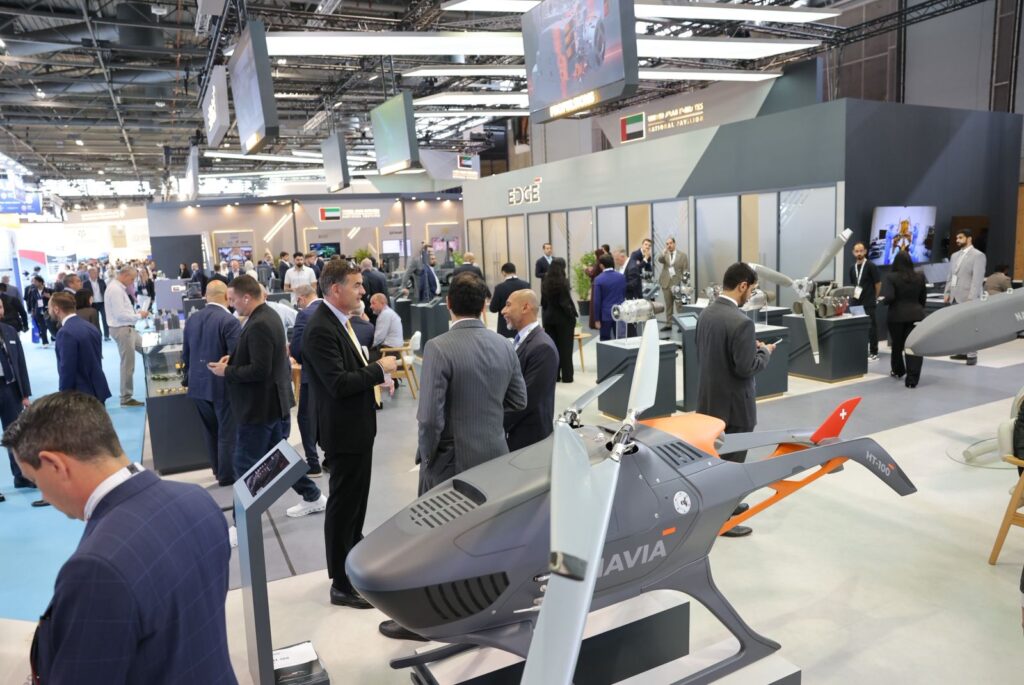
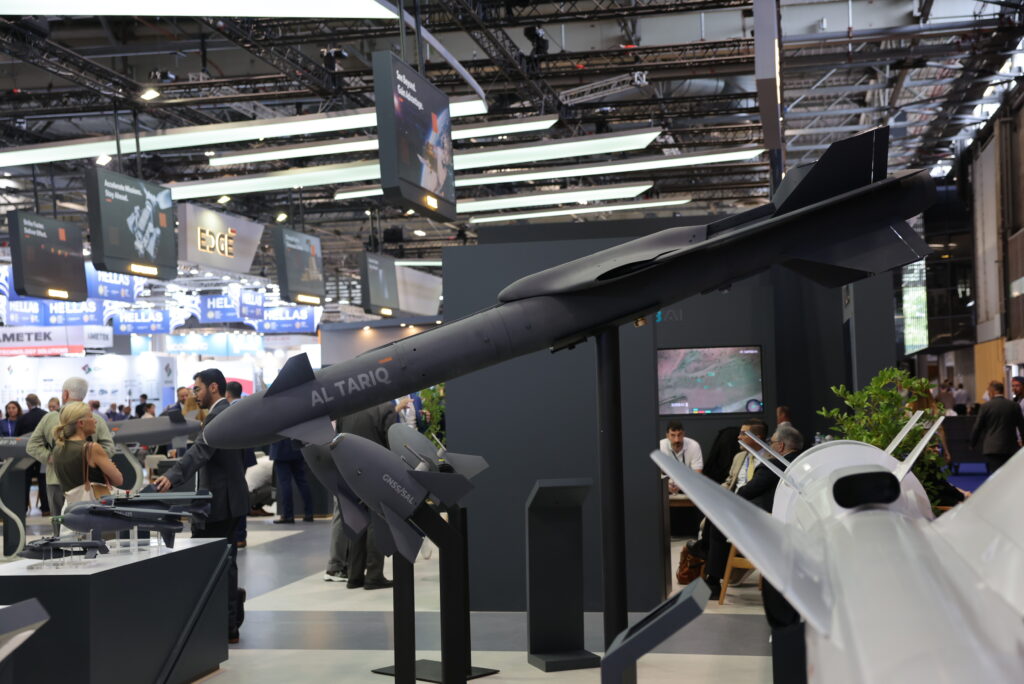
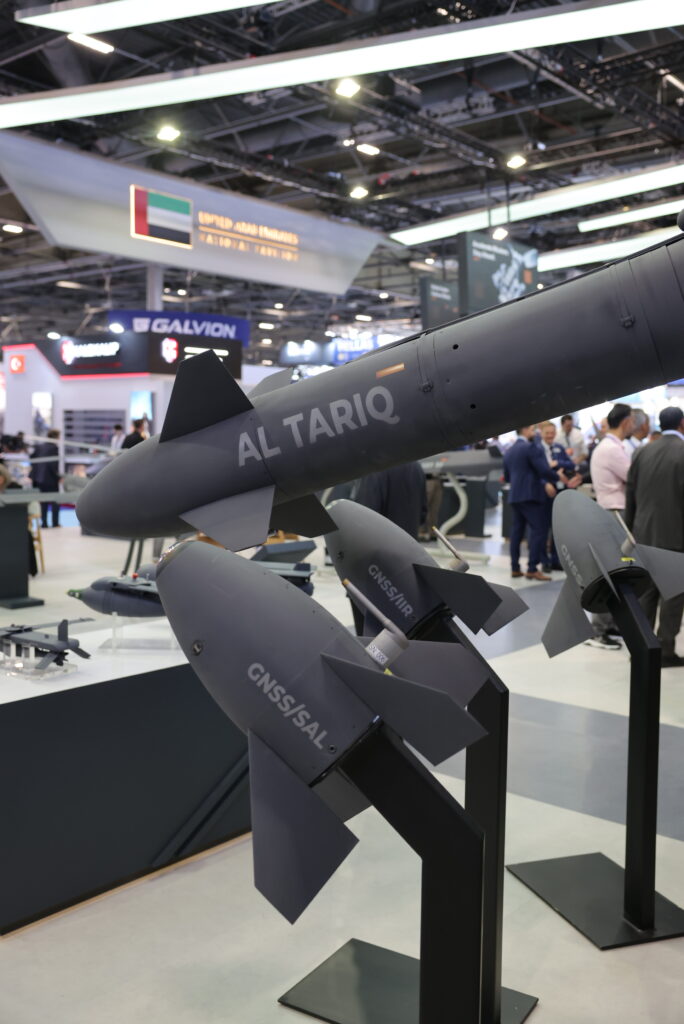
Our stand reflects where EDGE has grown into a genuinely multi-domain group. In uncrewed systems we are showing HT-100, HUNTER, SHADOW and JERNAS, alongside our SKYSHIELD, SHADOW 3 and SKYNIGHT layered air defence, counter-drone systems. These are platforms built for the kind of saturation threats, mass drone attacks and cheap, attritable systems, that are now shaping procurement decisions across the world, not just in our own region. On the weapons side, AL TARIQ, RASH and THUNDER showcase our precision-guided capability, and we are also bringing a selection of our propulsion systems, which underpin range and endurance across nearly everything else we build. Beyond that, we are exhibiting our MIRSAD, KASHIF and PHANTOMHAWK electro-optic and radar systems, our KATIM GATEWAY and KATIM X3M cybersecurity solutions, and a look at our sovereign space capabilities. Taken together, the display is less about any single hero product and more about demonstrating that EDGE can integrate across air, land, sea, cyber and space to deliver complete, mission-ready solutions, rather than standalone systems that a customer then has to stitch together themselves.
3- Modern battlefields increasingly rely on AI, autonomy, and multi-domain operations. How is EDGE integrating these capabilities across its portfolio?
We do not treat AI and autonomy as a separate division bolted onto the rest of the business. They run through how we design almost everything now, from how our counter-drone systems prioritise targets in a saturated airspace, to how our electro-optic and radar platforms process what they are seeing in real time. The value is not the algorithm itself, it is the decision advantage it gives the operator in the seconds that actually matter. Multi-domain integration is the harder problem, and the more important one. A single brilliant system that cannot share data with anything else around it is of limited use on a modern battlefield. Our work across air, land, sea, cyber and space domains is built around the idea that these systems need to talk to each other, operate collaboratively, and build a single, coherent picture for the people relying on them. That is a deliberate design choice across our portfolio rather than something we are retrofitting after the fact. We are also clear-eyed that this is a continuous race rather than a problem you solve once. As autonomy becomes more capable, the systems that defend against it need to evolve just as fast, and that is where a large share of our research and development effort is concentrated right now.
4- EDGE recently launched EDGE Europe. What strategic objectives does this new entity serve, and how will it support your long-term ambitions in Europe?
EDGE Europe exists to give us a genuine European identity rather than a UAE company that occasionally does business in Europe. We have set up our strategic headquarters in Paris and our engineering hub in Bordeaux, and that split is deliberate. Paris gives us proximity to government and partners, while Bordeaux gives us access to an exceptional aerospace supply chain and engineering talent pool, and the manufacturing depth to back it up. The objective is to build a European company, one that invests, manufactures and creates jobs locally, and not simply a sales office representing a parent company from abroad. We see this as bringing a different model into the European market: sovereign-minded, partnership-led, and able to move at the speed modern threats demand, which is increasingly what European customers are asking for. Over the long term, we intend to build out a genuinely networked European operation, expanding our industrial and technological presence across the continent as the right opportunities and partnerships present themselves.
5- Europe is increasing defence spending and seeking new industrial partnerships. How does EDGE assess opportunities in the European defence market?
Europe is going through a genuine shift, not a temporary uplift in budgets. Governments are rethinking what sovereign capability actually means, how quickly they can produce at scale, and how dependent they want to be on any single supplier. That shift plays directly to what EDGE has spent the last several years building. We see real opportunity in three areas in particular: uncrewed and counter-drone systems, where the threat picture has moved faster than most existing supply chains can keep up with; precision munitions, where production capacity across the continent is under genuine strain; and propulsion systems, which underpin the range and endurance of nearly every platform above them and where Europe still has real capacity to build out. Our approach is to assess these opportunities through partnership rather than simply competing for contracts from the outside. Stakes in Milrem Robotics, Anavia and Flaris, the planned CMD acquisition, and agreements with Fincantieri, Indra, Leonardo and Safran all reflect that. Each gives us a way into the European industrial base that benefits both sides, rather than a transaction that only benefits us.
6- Eurosatory is often a platform for major industrial announcements. What agreements, partnerships, or contracts has EDGE signed during the exhibition, and are there any additional announcements we can expect before the event concludes?
Eurosatory has been a genuinely active week for us. We have announced developments in many of our partnerships including agreements to establish joint ventures with Safran, Leonardo, and EM&E Group. For us, this week has not been primarily about signing contracts in Europe. It has been about putting the facilities, the people and the partnerships in place so that when a contract does come, we are already in a position to deliver it. If you wait for the contract before you start building, you have already lost the time you needed to be ready, and in this industry, that time matters more than almost anything else.
7- Looking ahead, which technologies do you believe will be the biggest drivers of defence innovation over the next decade, and how is EDGE positioning itself in these areas?
Autonomy and AI-enabled decision-making sit at the top of that list for me, not as a single technology but as something that touches almost every domain at once: how drones coordinate with each other, how air defence systems prioritise threats faster than a human operator could alone, and how a commander builds a coherent picture across land, air, sea, cyber and space in real time. Close behind that is mass production capability itself. The last few years have made it clear that having an excellent system is not enough if you cannot produce it at the scale and speed a real conflict demands. That is pushing the whole industry toward more resilient, more distributed manufacturing, which is exactly why supply chain sovereignty has become such a central part of how we operate. EDGE is positioning itself across both of these fronts at once. We are investing heavily in autonomous and AI-enabled systems, while also building the manufacturing depth, through our own facilities and through partnerships like those underpinning EDGE Europe, to make sure that when a customer needs capability at scale, we can actually deliver it, not just design it.