
Private – Ali Omar
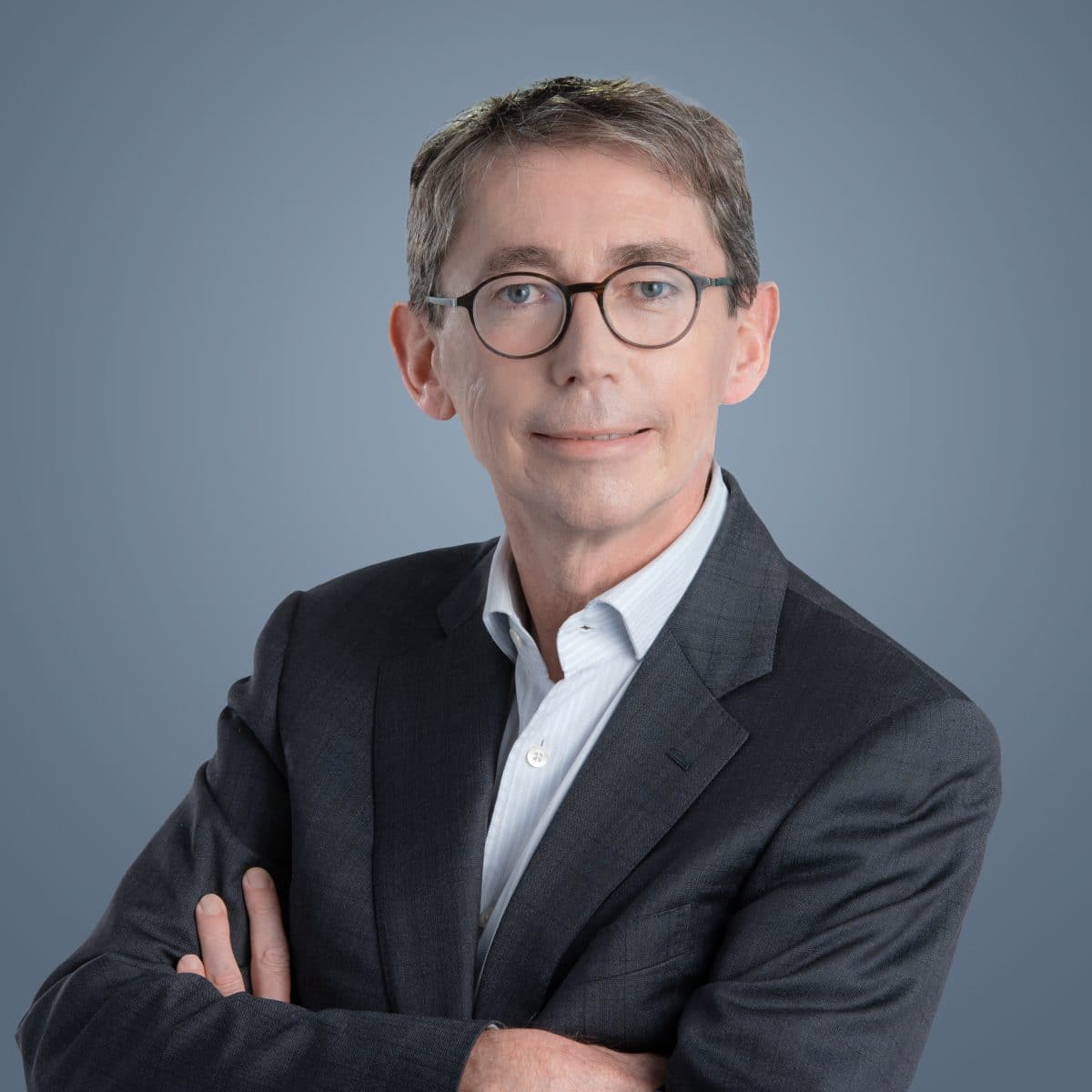
As Europe accelerates its defense modernization amid an increasingly volatile security environment, advanced air defense, electronic warfare, artificial intelligence, and industrial resilience have become central pillars of military preparedness. On the sidelines of Eurosatory 2026 in Paris, Security and Defense Arabia (SDA) spoke with Hervé Dammann, Executive Vice-President, Land and Air Systems at Thales, about how the company is responding to the lessons emerging from recent conflicts. In this exclusive interview, Dammann discusses the evolution of layered air defense against drones and hypersonic threats, the growing role of AI in command-and-control, Europe’s most pressing capability gaps, Thales’ expanding industrial capacity, and the company’s vision for strengthening a sovereign and interoperable European defense ecosystem. Next is the full interview:
1. Recent conflicts have highlighted the massive use of drones, loitering munitions, and electronic warfare. How is Thales adapting its land and air defense portfolio to address these evolving threats?
What we are seeing in today’s conflict zones has accelerated a shift that was already underway: the air threat landscape is more diverse, saturated and far less predictable than at any point in recent memory. Our approach at Thales is to help the armed forces detect, understand and respond to those threats with a single, integrated system – SkyDefender, a major highlight of our air and land defence portfolio. This system is a multi-layered air and missile defence solution that combines advanced sensors, command-and-control capabilities and effectors to protect against threats ranging from drones to ballistic missiles.
Equally important is the battle for electromagnetic spectrum. Modern military operations are no longer just about seeing and identifying threats. Success increasingly depends on the ability to detect, analyse, and dominate highly contested electromagnetic environments. This is where Thales comes in with over 70 years of expertise in radars, communications and electronic warfare. Thales helps armed forces achieve electromagnetic superiority through advanced spectrum intelligence, electronic protection and electronic attack capabilities.
Ultimately, the speed of understanding determines the speed of response. Everything we build is designed to compress that gap.
2. Europe is accelerating defense spending and rearmament efforts. What are the most urgent capability gaps that Thales believes European armed forces need to address?
Recent geopolitical scenarios have highlighted three priorities.
The first is air surveillance and air defence. The threat landscape has expanded significantly. Many countries are reassessing whether their existing capabilities are sufficient to detect and respond to these threats at the required speed and scale. In several cases, the honest answer is no, and that gap needs to close quickly.
The second is electronic warfare. Today’s operations are increasingly shaped by the electromagnetic spectrum. The ability to detect, understand and control that environment has become a decisive advantage protecting their own systems while disrupting those of an adversary.
The third is command and control. As the volume of data on the battlefield continues to grow, we need to turn information into decisions – faster. Armed forces need C2 systems that can bring together data from across land, air, sea, cyber and space to provide a coherent operational picture and support rapid decision-making.
Our systems integrate artificial intelligence developed by Thales within cortAIx, our AI accelerator. It allows to speed up the decision loop. At the sensor level: our radars integrate artificial intelligence in order to process more effectively and more quickly the mass of data captured. At the level of the command-and-control system: SkyView includes an “optimized orchestrator” that relies on the interconnection of all sensors (radar for example) and effectors (rockets, missiles…). Thanks to the AI, operators have a reduced cognitive workload and their mission becomes more efficient: the decision-making time goes from more than 24 hours to a few minutes
The technologies to address these challenges already exist. The priority now is accelerating deployment and ensuring armed forces have the capacity to adapt as threats continue to evolve.
3. Air defense has become a top priority for many nations. How do you see the future of layered air defense, particularly against drone swarms and hypersonic threats?
The future of air defence will be defined by complexity. Armed forces need to be prepared for all kinds of threats – big and small, including hypersonic systems that can appear simultaneously and from multiple directions.
This is precisely why layered air defence has become so important. It is no longer sufficient to think in terms of a single interceptor meeting a single threat. What is critical is networked system capable of detecting, prioritising and responding to the full spectrum of threats in real time and doing so faster than any human operator could manage alone.
Drone swarms are a good example. Today’s challenge is in managing large numbers of low-cost, autonomous systems that can saturate traditional defences. This is where artificial intelligence (AI) will play a significant role, specifically in helping operators process information faster and make decisions at the speed required by modern operations. The asymmetry here matters: a swarm of fifty drones costing tens of thousands of euros should not require fifty expensive interceptors.
At the same time, hypersonic threats are driving demand for greater anticipation and resilience. With reaction times shrinking by the second, early warning, long-range surveillance and robust coordination between sensors, command systems and effectors become non-negotiables.
4. Artificial intelligence is increasingly integrated into military systems. What role will AI play in command-and-control, sensor fusion, and battlefield decision-making over the next decade?
One of the defining challenges of modern warfare is information overload, and AI is emerging as the most effective way to address it.
Today’s commanders have access to more data than ever before, coming from all directions: sensors, drones, satellites, communications systems and multiple operational domains. Collecting that information is one thing, but making sense of it quickly enough to support effective decision-making is where the battle is increasingly won or lost.
This is where AI can earn its place. It can help identify patterns, correlate data from multiple sources, prioritise potential threats and present operators with a clearer understanding of the situation. In command-and-control environments, that means faster decisions and a more complete picture of the battlespace.
At Thales, we are already integrating AI into a range of defence capabilities through our AI accelerator, cortAIx, from sensor analysis and tactical decision support to autonomous systems. One principle, however, remains constant, particularly in defence: AI supports the decision-maker, it does not replace one.
Over the next decade, we will see more of human judgement combined with the speed and processing power of AI. The objective is to help make better decisions in complex settings.
5. Production capacity and supply-chain resilience have become strategic issues. How has Thales adjusted its industrial footprint to meet growing demand from European and allied customers?
In this area, the numbers tell the story.
We have been investing for several years to strengthen both our production capacity and supply-chain resilience. In 2026, we will invest approximately €830–850 million in capital expenditure, representing 40% growth in just two years. We are also recruiting 9,000 employees and expanding specialist training programmes through our network of Business and Domain Academies.
These investments are already delivering results. Between 2021 and 2025, we increased defence radar production in France from nine radars to approximately 33 per year. We have also increased by 5 (or quintupled) ground surveillance radar production in Germany and adapted industrial facilities to support defence manufacturing, including repurposing sites previously dedicated to civilian activities. These are our already delivered outcomes.
We have also worked closely with our wider industrial ecosystem to meet this demand. Resilience depends on the strength of the entire supply chain, from major partners to SMEs and specialised suppliers. A system is only as reliable as its least-resilient component, and we don’t take that lightly. Our focus now is to continue scaling while maintaining the quality, reliability and performance that armed forces expect from mission-critical systems.
6. Interoperability among NATO and partner nations is critical. How is Thales ensuring that its systems can seamlessly operate within multinational defense architectures?
Interoperability has become a fundamental requirement of modern defence. No nation operates alone, and the ability to share information, coordinate responses and operate effectively alongside allies is a baseline expectation today.
For Thales, interoperability starts at the design stage. We develop systems based on open architectures and recognised standards. This allows them to integrate with a wide range of platforms, sensors and command-and-control systems across allied forces.
That said, we recognise that nations also want to maintain sovereignty over their defence capabilities. We do not see those objectives as contradictory. Countries need systems they can own, operate and sustain independently, while still being able to contribute seamlessly to multinational operations when required. This approach is already reflected in solutions such as SkyView Alliance, our NATO air picture integration solution, deployed within architectures and enabling the sharing of a common operational picture across multiple systems and users.
7. Eurosatory 2026 is taking place at a time when Europe is strengthening its defense autonomy and industrial base. What role does Thales intend to play in building a more integrated and sovereign European defense ecosystem, and what concrete initiatives are you pursuing with European partners?
Europe’s defence ambitions will only be realised if technological innovation, industrial capacity and collaboration advance together. At Thales, we see ourselves as an architect of European defence capability, and that comes with obligations that go beyond delivering to contract.
That starts with innovation. We invest €4.5 billion annually in research and development across strategic technologies such as AI, cyber security, quantum technologies, advanced sensors and communications, with defence-specific R&D representing the fastest-growing share of that investment. These are technologies that will determine whether Europe can act autonomously when it needs to. It also requires industrial scale. We are continuing to expand production capacity, invest in new facilities, strengthen our supply chain and recruit the skills needed to meet growing demand from European and allied customers. Perhaps most concretely, it depends on partnership. The initiatives such as our partnership with Aura Aero on the Enbata MALE drone programme demonstrate how European companies can combine complementary expertise to develop sovereign capabilities for the future.
A stronger European defence ecosystem enables Europe to innovate, produce and act with greater autonomy. Thales intends to be a long-term contributor to that outcome as one of its builders.