
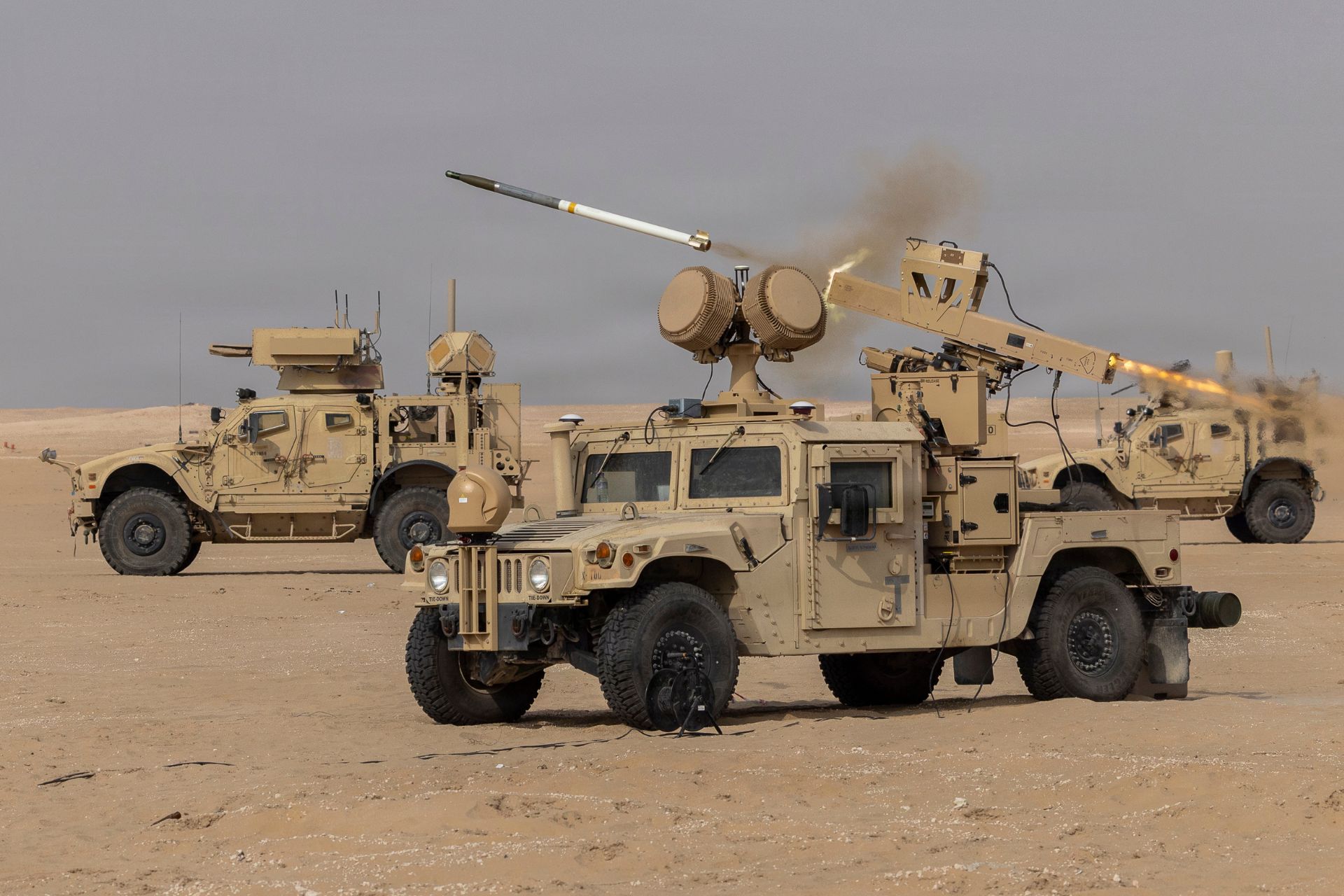
U.S. Central Command announced in a January 18, 2026, post on its official X account that American forces have fielded the Electronic Advanced Ground Launcher System at multiple operational sites across the Middle East. The disclosure, accompanied by imagery from the theater, signals a continued adjustment in U.S. air defense posture as small, low-cost drones remain a persistent threat to bases, logistics hubs, and personnel throughout the region, according to defense officials.
EAGLS is presented by CENTCOM as a precision counter-unmanned aircraft system designed to protect U.S. troops against a spectrum of small aerial threats. Developed by MSI Defense Solutions, the system is built around a 70 mm rocket launcher adapted for ground-based air defense roles and optimized for engaging drones at short ranges. Its introduction responds to operational realities in the Middle East, where adversaries increasingly rely on commercially derived or improvised unmanned systems to conduct reconnaissance, harassment, and limited strike missions against bases and logistical infrastructure.
At the core of EAGLS is the use of laser-guided rockets, notably the Advanced Precision Kill Weapon System II (APKWS II). This munition transforms the standard Hydra 70 rocket into a guided interceptor through a mid-body guidance section, allowing precision engagements without the cost burden associated with conventional surface-to-air missiles. APKWS II has an effective engagement envelope measured in several kilometers, sufficient to counter Group 1 and Group 2 unmanned aerial systems operating at low altitude and moderate speeds.
At the geopolitical level, the deployment of EAGLS signals a wider shift in U.S. and allied defense planning. The Middle East remains a testing ground for rapidly fielded systems responding to asymmetric threats, and lessons learned there increasingly inform force protection strategies elsewhere. By prioritizing adaptable and cost-effective solutions, Washington aims to maintain operational resilience against evolving drone tactics, a challenge that now extends well beyond the region and into the broader landscape of international security and defense competition.