
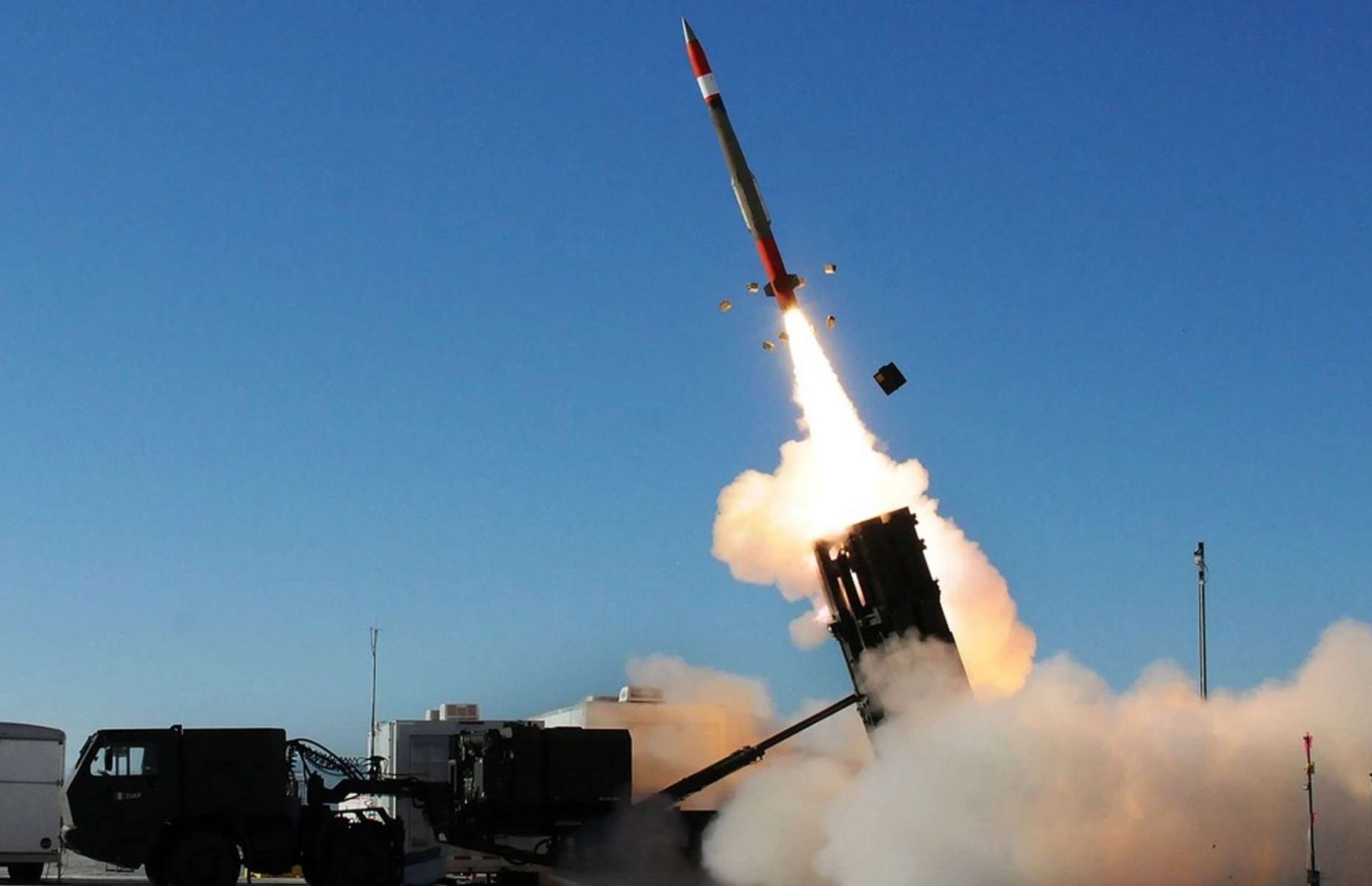
Lockheed Martin and the U.S. government have moved to fundamentally reshape how critical missile defense interceptors are acquired and produced, as rising global demand and persistent high-end threats strain existing stockpiles. Under a new framework agreement announced January 6, 2026, the company will begin transitioning PAC-3 Missile Segment Enhancement interceptor production to a sustained, high-rate model intended to expand annual output from roughly 600 missiles today to about 2,000 over the next seven years, pending congressional appropriations. The approach centers on long-term demand certainty, multi-year supplier commitments, and stricter delivery accountability, a shift Pentagon officials and industry executives say is designed to shorten lead times, stabilize the defense industrial base, and ensure the U.S. Army and allied partners can rely on continuous access to advanced air and missile defense interceptors during prolonged crises.
What makes the announcement more than another munitions headline is the mechanism behind it. The Department of Defense approach centers on long-term demand certainty paired with strict delivery accountability and supplier facilitization, including multi-year subcontracts intended to pull critical components forward in time. Lockheed Martin frames the deal as a way to finance tooling and throughput improvements without a massive upfront cash spike, while sharing savings enabled by stable volumes. The company is betting that predictable demand will unlock investment across its industrial ecosystem, pointing to a supplier network of more than 13,000 companies as the backbone for supply-chain resilience under sustained pressure.
The munition at the center of the plan is not simply a Patriot missile in the traditional blast-fragmentation sense. PAC-3 MSE is a hit-to-kill interceptor designed to destroy targets by direct body-to-body contact, converting closing speed into kinetic energy rather than relying on a large explosive warhead. That design philosophy drives the missile’s architecture, requiring extreme endgame accuracy, high maneuver authority, and guidance software capable of last-second corrections against maneuvering ballistic missiles and advanced cruise missile threats.
PAC-3 MSE represents a major evolution over earlier PAC-3 variants. It incorporates a larger dual-pulse solid rocket motor that significantly expands engagement range and altitude while preserving the hit-to-kill concept. The interceptor uses an active Ka-band radar seeker for terminal guidance, paired with a forward-mounted attitude control system composed of small solid-fueled thrusters. These thrusters enable abrupt lateral and vertical movements during the final seconds of flight, allowing the missile to counter evasive targets and steep reentry trajectories with high precision.
The missile’s effectiveness is inseparable from the Patriot battery architecture that provides detection, tracking, fire control, and engagement coordination. A modern Patriot battery integrates radar, engagement control stations, launchers, and communications nodes, allowing PAC-3 MSE to be cued and guided in layered air and missile defense operations. The interceptor’s compact dimensions allow higher launcher density, with a single launcher capable of carrying up to 12 PAC-3 MSE rounds. This magazine depth is tactically significant, enabling batteries to withstand saturation attacks and sustain defensive coverage during prolonged engagements where interceptor conservation becomes a command priority.