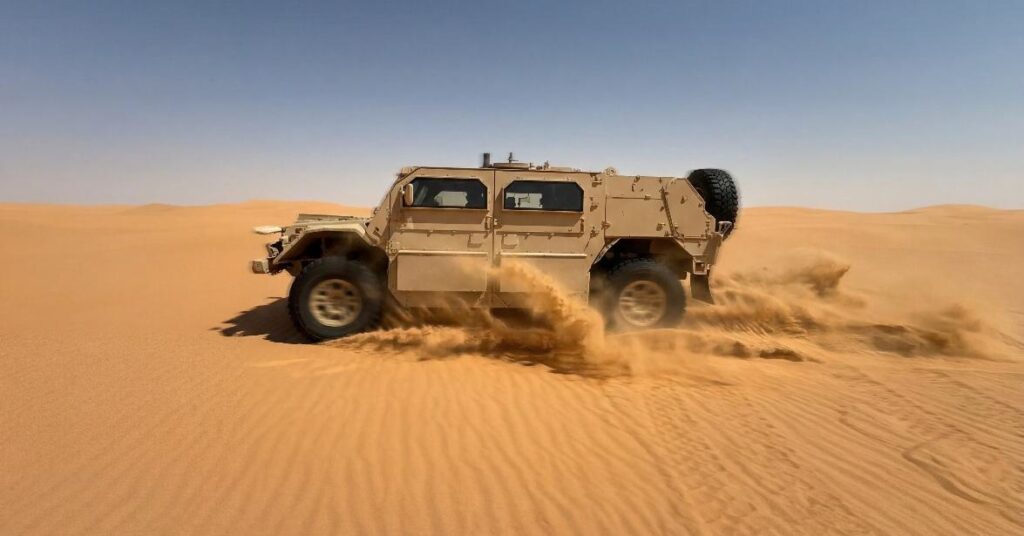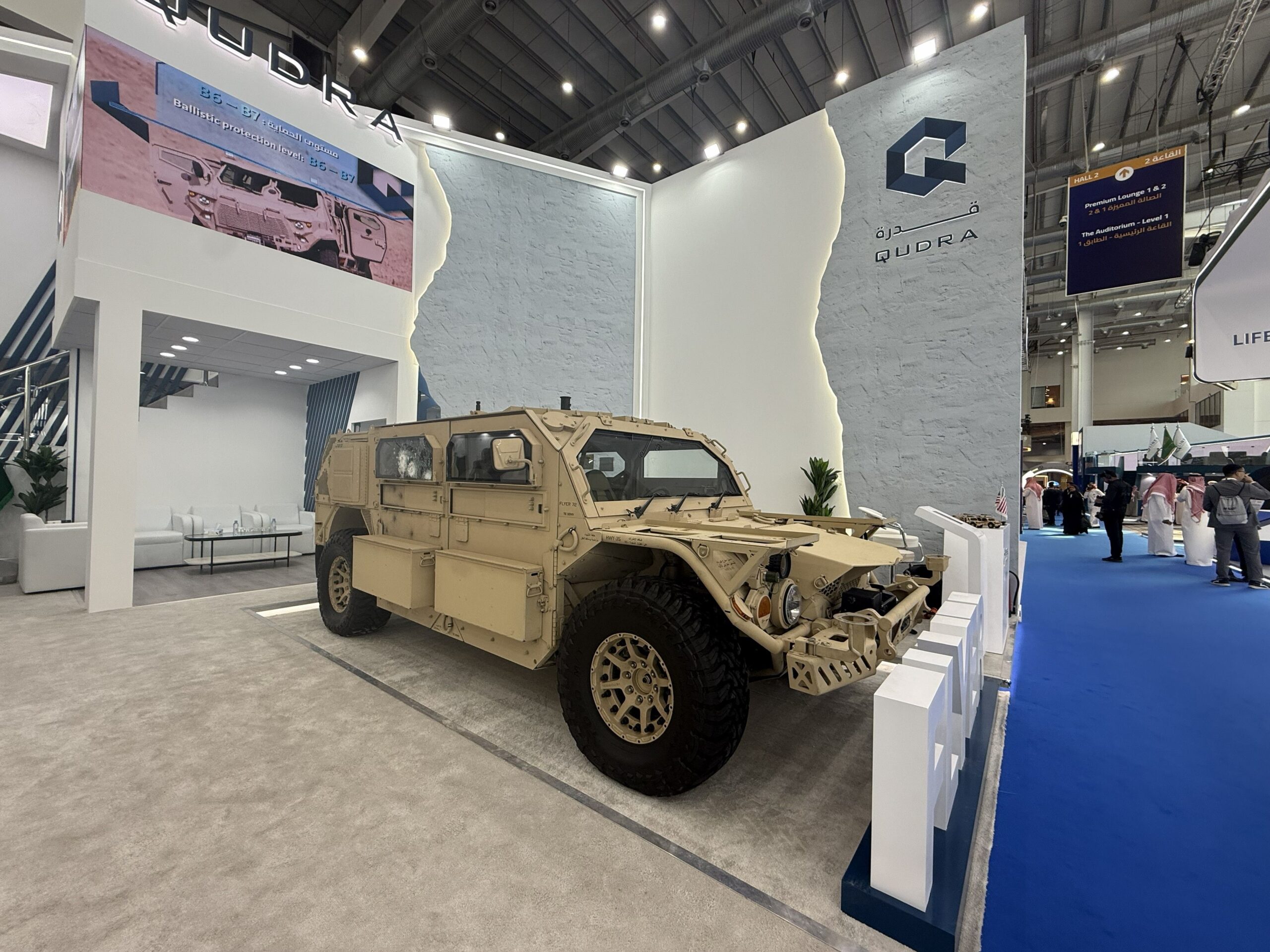
Flyer Defense, a U.S. manufacturer of high-performance light tactical vehicles, has signed a strategic cooperation agreement with Saudi-based defense manufacturing firm, Qudra Industrial Company to introduce the Flyer 72 family of light tactical vehicles to the Kingdom of Saudi Arabia. Flyer and Qudra intend to collaborate on joint production through a local-first approach aligned with Saudi Vision 2030.
At the center of the collaboration is the Flyer 72-Heavy Duty, a combat-proven light tactical vehicle that combines extreme off-road mobility, internal air transportability, field-installable armor compatibility, and a 2,900 kg payload. Built for harsh environments, the platform is designed to perform across weather extremes from -32°C to >52°C, making it suitable for operation in desert terrain. Flyer vehicles are currently in use by some of the world’s most elite armed forces including the United States Special Operations Command and other international allies.
“Our collaboration with Qudra is a natural extension of Flyer’s commitment to supporting customers with a proven platform,” said Robert Rice, Director of Business Development at Flyer Defense. “We’re proud to work with a forward-leaning Saudi company that shares our focus on innovation and operational relevance, to contribute to the Kingdom’s next chapter in ground mobility by helping raise expectations for performance, versatility, and readiness.”
The Flyer 72-HD’s modular architecture supports rapid reconfiguration for various mission needs, including reconnaissance, command-and-control, CASEVAC, logistics, and scalable firepower integration, without sacrificing mobility or payload. At 72 inches wide, the vehicle is internally air transportable in the CH-47/CH-53 and is Low Velocity Air Drop certified.
“Flyer Defense offers more than just a vehicle, but rather a platform with an incredible range of configurability,” said Rice. “This makes it possible to tailor our solutions to meet the dynamic and evolving needs of modern warfare, empowering military forces to adapt, innovate, and excel in diverse mission scenarios.”