
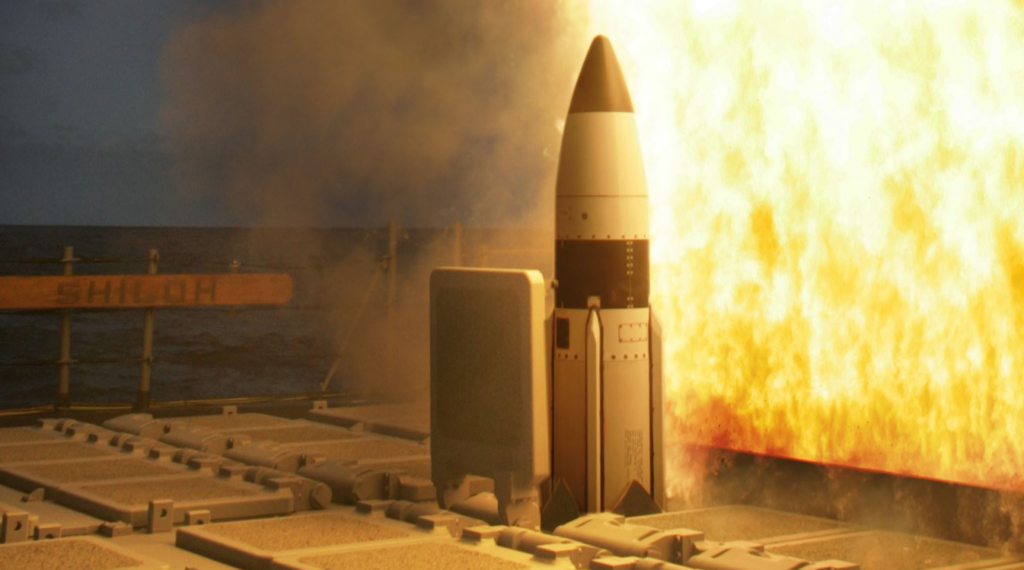
Raytheon has received a $745 million contract from the U.S. Missile Defense Agency to produce and sustain Standard Missile-3 Block IIA (SM-3 IIA) interceptors, the company said Monday.
The contract covers production and sustainment of the SM-3 IIA, an interceptor used in ballistic missile defense missions by the United States and allied countries. Work will be carried out at Raytheon facilities in Tucson, Arizona, and Huntsville, Alabama.
The SM-3 Block IIA is designed to intercept short- to intermediate-range ballistic missile threats. The variant features a larger rocket motor and an upgraded kinetic warhead compared with earlier versions of the Standard Missile-3 family, according to Raytheon.
The SM-3 IIA program is being developed through cooperation between Raytheon and Japanese industry. Japan is a key partner in the program and operates the missile as part of its broader ballistic missile defense architecture.
Raytheon said it has invested in expanding production capacity for the Standard Missile family as demand for missile defense systems increases. The company recently completed a $115 million expansion of its missile integration facility in Alabama, which it said will increase integration and delivery capacity by more than 50%.
The latest contract comes as the United States and its allies continue to strengthen regional ballistic missile defense capabilities in response to the proliferation of increasingly capable missile systems.
The SM-3 is deployed from Aegis-equipped ships and is also integrated into land-based Aegis Ashore installations. The system uses hit-to-kill technology, destroying incoming ballistic missile targets through direct kinetic impact rather than relying on a conventional explosive warhead.
Raytheon said the contract will support continued production and sustainment of the SM-3 IIA while increasing the availability of interceptors for U.S. and allied missile defense forces.