
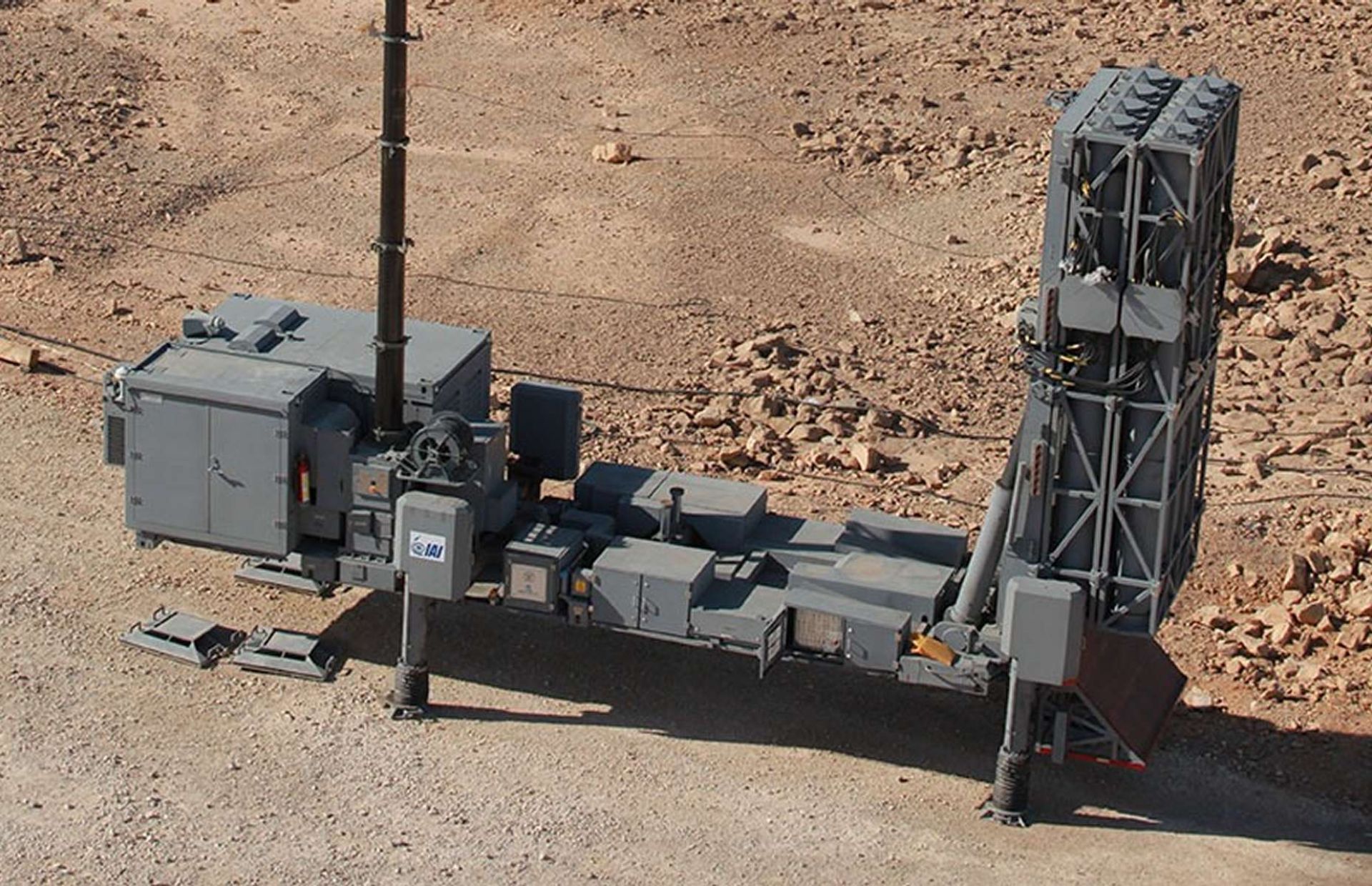
Morocco has quietly activated Israel Aerospace Industries’ Barak MX air and missile defense system, marking a shift from acquisition to operational readiness, according to reporting from the Times of Israel and subsequent Israeli defense media coverage. Satellite sensors reportedly detected the system’s electronic signature at a purpose-built air defense site near Sidi Yahya el Gharb, northeast of Rabat, indicating the Royal Moroccan Armed Forces are now fielding a modern, layered interceptor architecture designed to counter drones, aircraft, cruise missiles, and ballistic threats.
Barak MX is built around a battle-management center that fuses radar tracks and external sensor feeds, then assigns interceptors based on target type, geometry, and cost of engagement. In its land configuration, the system is truck-transportable and typically paired with Elta’s ELM-2084 active electronically scanned array radar. The ELM-2084 family is widely associated with high-tempo air defense missions, and open-source technical references credit it with a surveillance range approaching 470 km and the ability to track well over a thousand targets simultaneously, while supporting remote operation for dispersed crews. For Morocco, that radar-centric architecture matters as much as the missiles: it is the sensor and command layer that turns separate launchers into a coherent, time-sensitive kill chain.
Barak MX’s tactical punch comes from its use of vertically launched interceptors that share a common launcher concept while offering different engagement envelopes. Defense reporting on the system describes an eight-cell vertical launcher option and three missile tiers: Barak MRAD with a range of about 35 km, Barak LRAD extending to roughly 70 km, and Barak ER, which adds a booster stage for engagements out to 150 km. Altitude coverage is assessed at up to 20 km for MRAD and LRAD, and up to 30 km for the ER interceptor, widening the defended battlespace against higher-flying aircraft and more stressing missile profiles. In practical terms, MRAD is optimized for point and local-area defense against low-altitude threats such as drones and cruise missiles, LRAD expands coverage against aircraft and stand-off weapons, and ER introduces a longer-range layer that complicates an adversary’s planning by forcing earlier launch points, higher flight paths, or heavier saturation packages.